Is the hybrid workplace the new normal?
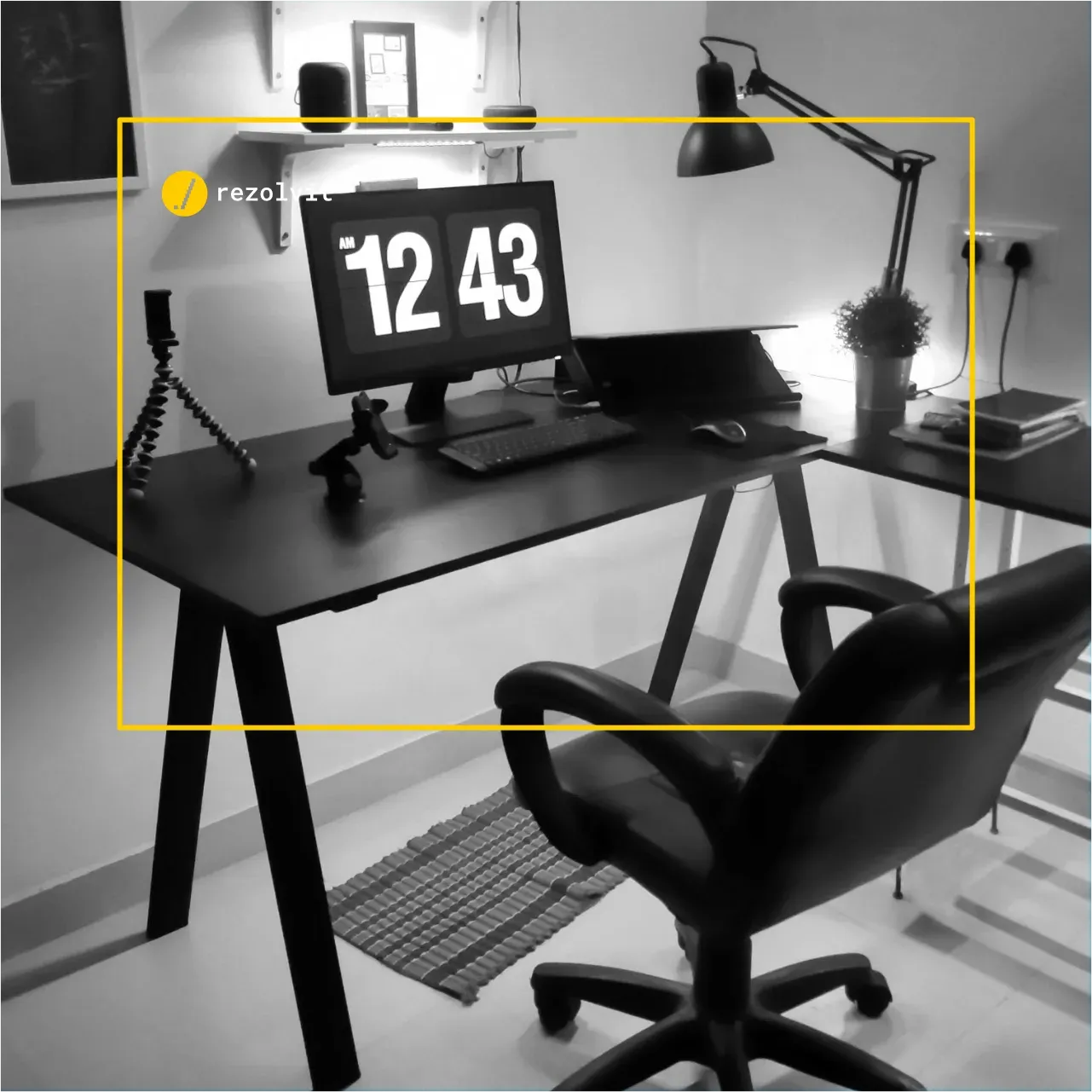
For many office-based companies, yes: hybrid work, meaning part of the week in the office and part at home, has remained a normal way of working since the pandemic. It isn’t the rule everywhere, though. In Romania, working from home is still rare: according to Eurostat, in 2025 only 1.3% of employees usually worked from home, compared with almost 9% on average across the European Union. And some large companies have since asked their staff to return to the office five days a week.
We wrote the first version of this article in September 2021, when companies in Romania were starting to reopen their offices after the pandemic restrictions. Back then, we wondered what the “new normal” would look like and whether we would ever go back to the way we used to work. Below you’ll find what the studies showed at the time and what has been confirmed since.
What did the studies show in 2021?
The almost universal adoption of remote work, even in companies that had until then relied entirely on offices, brought work-from-home skills and technologies into even the most traditional organizations. A study by the recruitment group Adecco showed at the time that more than three quarters of employees in the UK believed a combination of office work and remote work was the best way forward after the restrictions.
Microsoft’s 2020 and 2021 studies (Work Trend Index), based on extensive surveys, reached similar conclusions:
- 82% of managers expected to have more flexible work-from-home policies after the pandemic, and 71% of employees and managers wanted to work from home at least part of the time;
- more than half (52%) of those surveyed felt more valued or more included, because everyone was “in the same virtual room”;
- almost 60% felt less connected to their colleagues since they had started working remotely more often;
- chat messages in Teams meetings had grown more than tenfold between March and June 2020. In-meeting chat has no equivalent in a face-to-face meeting: anyone can share their opinion without interrupting the others.
IT infrastructure: tell me more →
Remote work means flexibility
Remote work goes almost inevitably hand in hand with flexible work. It can be a model where employees work from home part of the week and in the office the rest of the time, one where one team stays at the office while others work remotely, or one where everyone organizes their own week without being tied to “office hours”. With today’s tools, all of them are possible.
In 2020–2021, several large companies took firm positions. Twitter announced in 2020 that its employees could work remotely “forever”, but in November 2022, after the change of ownership, the company (later renamed X) called staff back to the office. In 2021, Spotify launched its “Work From Anywhere” program, which let employees work from anywhere, aiming to attract specialists from all over the world with salaries on a par with those in New York or San Francisco. Dropbox announced in 2020 that it was giving up offices for individual work and turning them into spaces for meetings and collaboration. Other companies went the opposite way: Amazon, for example, asked its employees to return to the office five days a week from January 2025.
IT outsourcing: tell me more →
Is there still a place for physical offices?
Yes. The experience of recent years shows that many companies have chosen neither the permanent office nor working only from home, but a mix. The need for direct contact brings people back to a shared space, especially for meetings, new projects and onboarding new colleagues.
Not everyone has good working conditions at home: there are distractions, the internet connection isn’t always stable, and a separate home office is a luxury. That’s why a space where people can focus, meet and work together remains an essential part of the modern workplace.
The office has changed, though. In 2021, Jared Spataro, then Corporate Vice President for Microsoft 365, said that physical spaces needed to be reimagined, with greater emphasis on giving people the chance “to meet, share ideas with each other and experience the energy of in-person events”. Unassigned desks (hot desking) are increasingly common, but collaboration spaces for teams that work together and rooms that connect colleagues in the office with those at home remain essential.
Technology plays the leading role here: from good headsets and webcams to meeting rooms equipped for hybrid meetings, such as those with Microsoft Teams Rooms, with quality sound and video, live captions and a digital whiteboard, so that everyone can be seen and heard, whether they join from the office or from home.
The 9-to-5 workday may be a thing of the past
Microsoft’s data from 2020–2021 showed a clear change in working hours: the average time spent in Teams had increased by more than an hour, chat messages had grown by up to 23% early in the morning and in the evening, and by more than 200% at weekends.
The tools have adapted. MyAnalytics and Workplace Analytics, which we mentioned in 2021, have since been folded into Microsoft Viva Insights, which helps employees book focus time in their calendar, during which Teams notifications are turned off. It’s useful for people working from home, but also for those in the office.
We can’t lose sight of well-being at work
Protected free time is just as important. Teams on your phone lets you set quiet hours and quiet days, during which work notifications no longer appear. In a culture where employees are “always available”, a clear risk of hybrid work, settings like these help them protect their personal lives.
Employee well-being matters for long-term productivity, and managers with mixed teams need a consistent way to stay in touch with each person. At the end of 2020, Microsoft introduced the Reflect extension in Teams, which let leaders send colleagues short questions about how they were feeling, in the form of a mini poll. Like a glance across the office, the answers showed the manager whether someone was going through a tough time, so they could support them in time. Whatever the tool, the idea still holds: regular one-to-one conversations matter all the more the less often the team sees each other.
What does the IT of a hybrid company need?
A company that works hybrid needs its employees to find the same files and applications, with the same level of security, wherever they are. Specifically:
- Centrally managed laptops, with disk encryption, automatic updates and managed antivirus. See also the mandatory security measures for work laptops used at home.
- Two-step verification (MFA) for email, VPN and all cloud applications.
- Files in the cloud, with backup: documents are kept in OneDrive, SharePoint or Google Drive, not just on the laptop, and the company keeps a separate copy, for example through Backup as a Service.
- Secure access to the applications at the office, through a VPN or a solution that verifies the user’s identity and device.
- Remote support: the technician connects to the employee’s computer, with their consent, wherever they are. RezolvIT uses the MspCoreX application for this, and when needed we also come on site.
For details on working from home with the same applications as in the office, see our article on working from home with Microsoft 365.
Get ready
The technology for hybrid work exists and has matured: applications that bring office and home teams together, tools that organize the workday and settings that protect free time. The question is whether your company’s organization and workspaces are ready to adapt to the way people want to work, so the company can benefit from the engagement and productivity that a well-designed hybrid model can bring.
To find out how Microsoft 365 can help you move to hybrid work, contact us or ask for a free IT audit.
RezolvIT is an IT outsourcing company that supports the businesses it works with, from IT security to employees working remotely.
Tell us what’s slowing you down. We’ll call you.
It takes 30 seconds, and a specialist will call you back within 2 business hours.
- free IT & AI audit, no obligation
- a report with risks and concrete recommendations
- a clear offer, with a fixed monthly plan
Prefer the phone? 031 432 8681